Using ChatGPT to write your EMS narratives? Read this first
Many medics paste patient details into ChatGPT to write their narratives. Here's why that's a HIPAA problem, what it means for you personally, and the compliant way to get the same time savings.
By vitalvoice Team
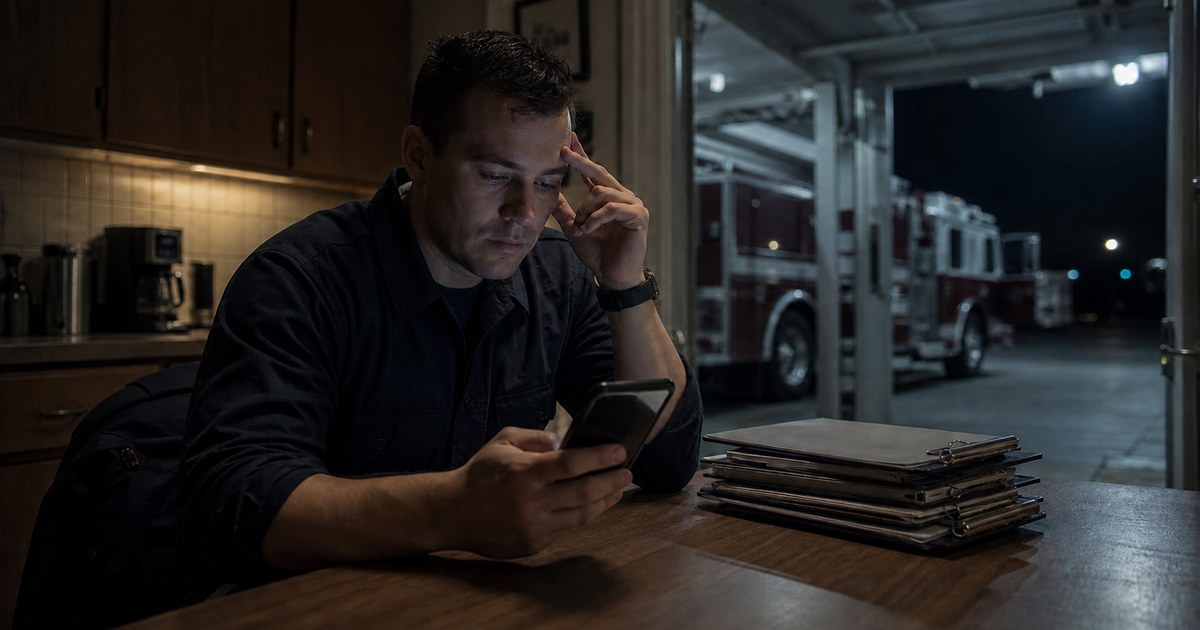
It is the end of a long shift. You still have four charts to write. Someone on the crew has a ChatGPT prompt saved in a notes app. It can turn a few rough sentences into a clean DCHART narrative, a common EMS report format.
It works. That’s why everyone’s doing it.
It is also a HIPAA breach. That can put you in a bad spot. Here is why, along with a safer way to get the same time savings.
Why crews reach for ChatGPT
Nobody became a medic to write reports. But the narrative must be done before you can go back in service. ChatGPT can turn “56-year-old male, chest pain, gave aspirin, transported” into a structured report in your department’s format.
The problem isn’t that you’re using AI. The problem is which AI, and whose account.
Is ChatGPT HIPAA compliant?
No. Not the consumer version used by crews in the field. Here is why:
- No BAA. HIPAA requires a signed Business Associate Agreement (BAA) with any vendor that handles protected health information (PHI). OpenAI does not sign BAAs for consumer ChatGPT accounts. Without one, sending PHI is a breach.
- It is your personal account. The chart stays in your chat history on servers your department does not control. Your department also has no agreement with the service. Consumer AI services may use chats to train future models unless you change the right setting.
- There is no audit trail. The call may be reviewed later because of quality assurance (QA), a complaint, or a lawsuit. Your department has no clear record of what you entered or what the AI produced. There may only be a chat log on your personal phone, and a records request could reach it.
There is another risk: a general-purpose model may invent details. ChatGPT may produce believable vital signs or an assessment you never gave it. An invented blood pressure in a signed legal document is a career problem, not a formatting problem.
”I strip out the names, so it’s fine”
Removing the name helps, but it may not be enough. Dates, times, locations, ages, and rare conditions can still point to a patient. This is especially true in a small district. It also does not fix the other problems: no BAA, no audit trail, and no clear way to defend the output under oath.
If a records request finds that the crew wrote charts with ChatGPT on personal phones, being careful may not be enough to protect you or the department.
What the compliant version looks like
The answer is not to stop using AI and type by hand at hour 47 of a 48-hour shift. The answer is to use a tool built for EMS reports:
- A BAA is available for your department, so PHI is handled legally.
- Encounter content that stays on the crew’s device. In vitalvoice, it stays encrypted on the device for 90 days by default, or on the department’s wipe schedule. Our servers process it and discard it: no transcript, narrative or audio is stored there.
- Your department’s exact template. vitalvoice can match its sections, order, headings, terminology, and call-type rules. SOAP, CHART, DCHART, and DRAATT are starter formats only when your department does not already have a defined template.
- Drafts only from what was said on scene. You review, edit, and sign the draft before it reaches the electronic patient care report (ePCR).
- A record that protects you. Every session keeps its time and GPS location as operational metadata, even after the encounter content is gone from the device. If someone reviews a call two years later, those details can support the final chart.
Try it on your next call — free
Crews: Download vitalvoice from the App Store. You get two free sessions in each mode: Dictate, Ambient Scribe, and Translate + Scribe. You do not need a sales call. Try it on a real call and compare its draft with the one from your prompt.
Crews rate vitalvoice 5.0 on the App Store, and 500+ first responders use it. If its draft works better for you, send this article to your chief or training officer. Departments receive a low, fixed price for the capabilities they choose, and that price does not change with usage. Most crews can start using it within a week.
Chiefs and training officers: Book a 30-minute demo. We will show you the BAA, on-device data handling, and the medic review-and-sign step.
Quick answers
Is ChatGPT HIPAA compliant for EMS narratives? No. OpenAI does not sign a BAA for consumer ChatGPT accounts. Entering patient information in one is a HIPAA violation, even if it saves time.
Can I use ChatGPT if I remove patient names? It is still risky. Dates, locations, ages, and unusual details can point back to a patient. You also have no BAA or audit trail. The tool may add clinical details you did not give it.
Is there a HIPAA-compliant AI for writing EMS narratives? Yes. vitalvoice was built for fire and EMS. A BAA is available. Encounter content stays encrypted on the crew’s device for 90 days by default, or on the department’s wipe schedule, and our servers store no transcript, narrative or audio. The draft follows your department’s exact template, and a medic reviews and signs it before it reaches the ePCR.